Blog Detail
Posted on September 4, 2026 at 12:24 PM
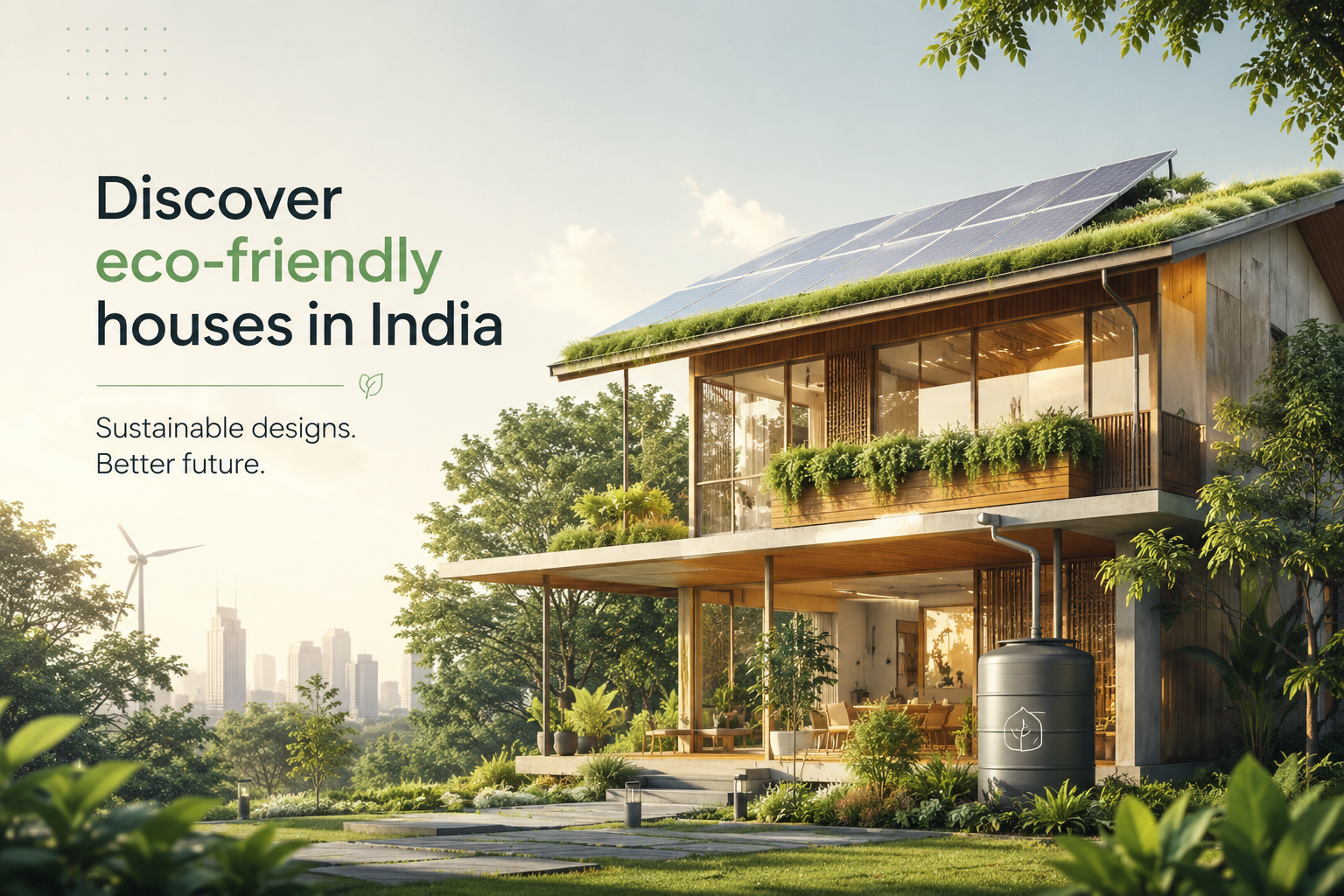
Performance Analysis of Eco Friendly House in India 2025-’26
India’s residential construction sector is undergoing a shift towards homes that offer comfort, conserve resources and provide value. Sustainable residential design is rapidly becoming the benchmark for modern Indian housing. The overall performance of an eco-friendly house in India will depend on factors such as construction cost, energy consumption, durability and the ultimate factor comfort.
Residential buildings constitute the single largest end-use category in terms of value of green building materials in India, and the Indian construction sector is witnessing a paradigm shift as sustainability transitions from niche to mainstream.
For homeowners, it is a matter of balancing capital outlay with return on investment. Thoughtful design, materials, and the adoption of green-building methods deliver major benefits in performance, durability, and value for money.
Sustainability Is On The Rise
The environmental impact of buildings is an increasingly important issue and is driving growth in the sustainable construction market.
Indian construction emits 17% of the country’s greenhouse gases, with buildings and their construction being responsible for around 40%. Thus, there is a particular need to develop methods and materials to make buildings more energy efficient.
In 2024, India verified 370 LEED-certified projects covering 8.5 million square meters. Moreover, residential buildings are expected to play a particularly important role since they comprise 45% of India’s green building materials market in 2025.
Why India Is Rethinking Residential Construction
An eco-friendly house in India is more than just a building made with alternative materials. The most important aspect is optimizing design, materials, energy, water, and waste management to ensure maximum efficiency.
Energy-efficient windows, insulation, natural ventilation, solar options, and energy-saving bulbs reduce the energy used in a home and/or building. Using alternative materials like AAC blocks, fly-ash bricks, recycled steel, and low-VOC paints substantially reduces the building’s embodied carbon and operational energy demand.
These choices can also affect the cost of an eco-friendly house in India, depending on the materials and technologies selected. The IGBC’s residential rating systems offer guidelines that help bring sustainability to homes and residential communities.
What Makes An Eco-Friendly House in India Truly Sustainable?
A home’s performance depends on the combined effect of various passive factors. Therefore, sustainability in this case goes beyond the materials used to build the house.
This is because the orientation of the home, lighting, materials and appliances that are used in construction and that conserve energy can have an effect on the home’s overall sustainability.
The Real Economics of Building Green
Building an eco-friendly house in India costs between 1,500 and 4,500+ rupees per square foot, compared to standard construction costs of 1,800 to 2,800 rupees per square foot.
Hence, an eco-friendly house in India may require a higher initial outlay, driven by integrated solar panels, rainwater harvesting, glazed windows, and supportive insulation. However, in the long run, eco-houses are much more cost-effective and energy-efficient as they save significantly on utility bills.
Materials That Shape Performance
Material choice plays a vital role in both construction process efficiency and final performance. AAC blocks, for example, offer good thermal insulation while being lighter and requiring less mortar. Wall construction usually accounts for 10-15% of total construction costs, so it’s important to optimize material choices to balance performance and cost.
Designing Eco-Friendly Homes in India Based upon Climate
Performance also depends on location. An eco-friendly house in India needs to respond to local climatic conditions rather than follow a single design model. Similarly, houses in cold climates might need insulation, shaded openings, and cool roofs, while those in rainy climates might need different provisions.
Key features like daylight, cross-ventilation, and suitable building orientation can improve comfort while reducing the use of artificial lights and coolers.
The Road Ahead: Long-Term Value of Green Homes
The main advantage of eco-friendly homes in India is their cost-effectiveness in creating a brighter future. Households are the largest category of end-users for green building materials in India.
Moreover, the Indian construction industry is currently undergoing a paradigm shift as sustainability moves towards the mainstream.
For homeowners, it is a matter of balancing capital outlay with return on investment. Thoughtful design, materials, and the adoption of green-building methods can deliver major benefits in performance, durability, and value for money.
OUR COMMITMENT TO EXCELLENCE
Our corporate vision is to build a better world through excellence, teamwork and innovation. Our commitment to excellence is the driving force behind everything we do. Our projects effortlessly stand the test of time and we continue to work with a sharp focus on timelines.