Blog Detail
Posted on August 28, 2026 at 7:44 AM
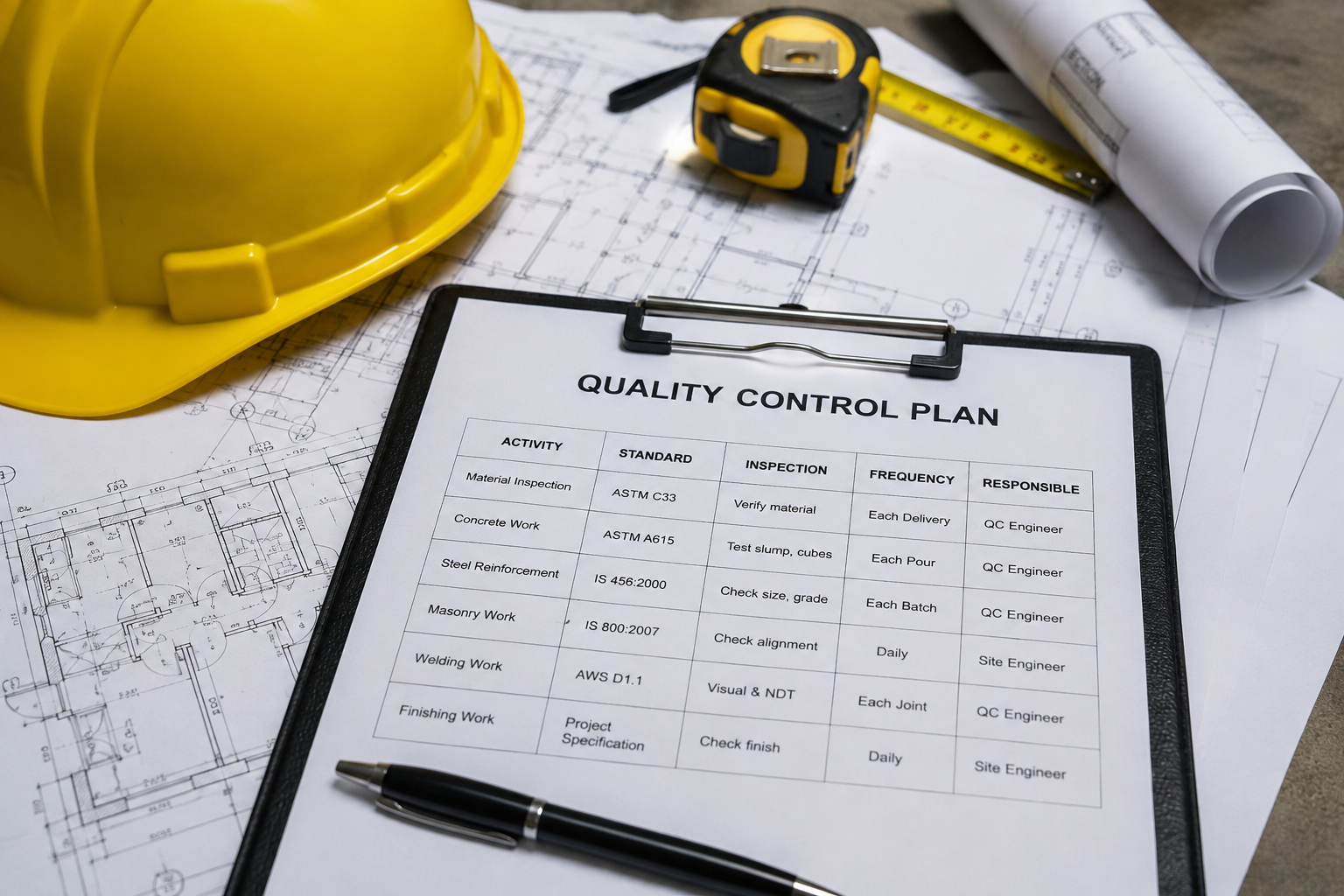
Construction quality is no longer judged solely by the condition of the structure at the end of a project. As the stakes rise and budgets increase, compliance obligations grow more rigorous and buyer demands become more specific. For these reasons, contractors require an improved quality control strategy. An efficient contractor QC plan construction creates a reliable framework that establishes criteria, inspection rules, ownership and other standards required to manage and control the quality of a project during its life cycle.
Why Quality Control Is Becoming A Priority?
Quality issues can affect project timelines, budgets, safety and customer confidence. Here are the reasons:
- Rework alone can account for an average of 12% of total project costs, according to the Construction Industry Institute.
- Cost pressures make early quality intervention even more important. JLL estimates that construction costs for real estate projects in India could rise by 3-5% in 2026, largely because of higher input and labour costs.
For contractors, preventing defects at the source can therefore be more valuable than rectifying them after installation.
What Is A Contractor QC Plan?
A contractor’s QC plan is a documented description of activities that will ensure quality control during construction. It defines the scope of quality control, acceptance criteria, the inspection program, test requirements, and responsibility for completing and correcting deficiencies.
A complete contractor QC plan for the construction process usually begins by identifying acceptance criteria, typically derived from construction contract requirements, building codes, and specifications. The process then determines how materials, labor, and other activities will be inspected and documented.
Building Quality into Every Project Stage
An effective QC plan should not wait until construction is complete. Plan quality control activities across project stages, including purchasing, submittal reviews, installation, testing, and final inspections.
The Five-Step QC Framework
A practical contractor QC plan for construction can be based on the following five steps:
- Specify acceptance criteria – Set of requirements that will be used to evaluate the work results.
- Plan inspections – Determine what work needs to be inspected, when inspection should take place, and who will perform it.
- Specify checklist requirements – Provide the list of requirements that should be double-checked by the inspectors.
- Specify deficiency control – Document all identified issues and provide the action plan for their resolution.
- Evaluate performance – Analyse the recurring problems and use the information to improve the construction work in the future.
Documentation Strengthens Accountability
A proper contractor QC plan and construction framework document the quality of the work performed: inspection reports, test results, material approvals, photographs, and corrective-action records. These help to demonstrate that work was done correctly.
That is especially important in the current environment of increased regulatory scrutiny of real-estate projects.
As outlined in RERA 2.0, as imagined by BeyondWalls, 70% of homeowner funds must be placed in escrow, with additional checks such as third-party construction audits and five-year defect liability periods. For now, this means both contractors and developers must ensure they have thorough documentation of the quality of construction performed.
Can Technology Strengthen QC Execution?
As construction QC is getting more data-driven, by using digital tools to centralise project checklists, documents, deficiency reports and test records, teams can better utilise the information. To see why improved visibility is a priority for so many organisations, just look at the results of the Quickbase survey of more than 430 construction executives:
48% say they’ve had projects delayed or missed a deadline in the last year, while 41% say they’ve struggled to get a complete view of a project because information is siloed across systems, and 29% say they have difficulty sharing accurate, real-time information with extended teams.
The Road Ahead For Construction Quality
A successful contractor QC plan focuses primarily on preventing issues rather than identifying them after they occur. By establishing clear standards and conducting regular inspections, ensuring documented corrections and connected project data, a contractor can control rework and delays, standardize practices, and verify that built structures fit specifications.
As construction costs rise and regulations grow more rigorous, construction site quality control will become a strategic project-management tool. By introducing QC principles into day-to-day operations, a contractor can improve project performance, enhance overall quality, and ensure the project meets client requirements.
OUR COMMITMENT TO EXCELLENCE
Our corporate vision is to build a better world through excellence, teamwork and innovation. Our commitment to excellence is the driving force behind everything we do. Our projects effortlessly stand the test of time and we continue to work with a sharp focus on timelines.